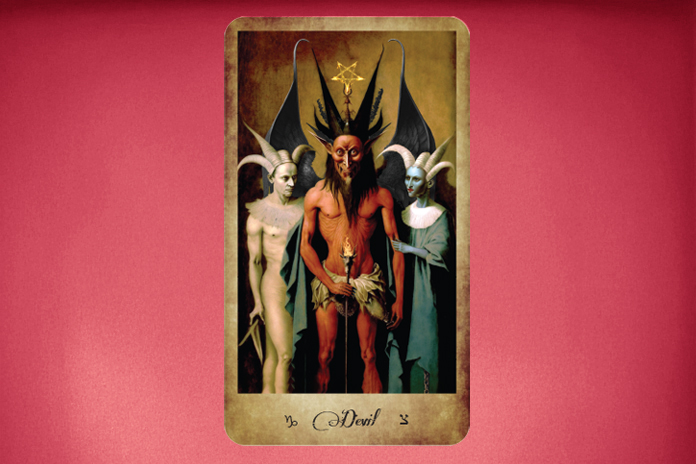
Most people tense up when they see The Devil. Fair enough. This card has a talent for turning the lights on in the room you’ve been avoiding. But in real life, The Devil is rarely about “evil”. It’s about attachment: the habit, the person, the story, the hunger, the panic, the pleasure, the control. The places we give our power away and then call it fate.
The meaning of tarot cards The Devil often arrives when someone feels stuck but can’t admit what they’re getting from staying stuck. That’s the twist. The Devil doesn’t only show the chain, it shows the hook. And once you can name the hook, you can unfasten it.
What Is the Meaning of the Devil Tarot Card?
The Devil tarot card meaning points to bondage, obsession, temptation, and power dynamics. It often shows up when desire has turned into dependency, or when fear has started running the day like an unpaid manager.
The meaning of the Devil tarot card can be as obvious as a toxic situation you keep returning to, or as quiet as an inner script that says, “I don’t get to have better than this.” It can highlight compulsions, avoidance, jealousy, shame, or the need to control outcomes.
Reversed, The Devil usually suggests release: the beginning of sobriety (literal or emotional), a truth spoken out loud, a boundary held, or a chain slipping off because you finally stop pretending it’s jewellery.
The Devil Tarot Card Symbolism Explained
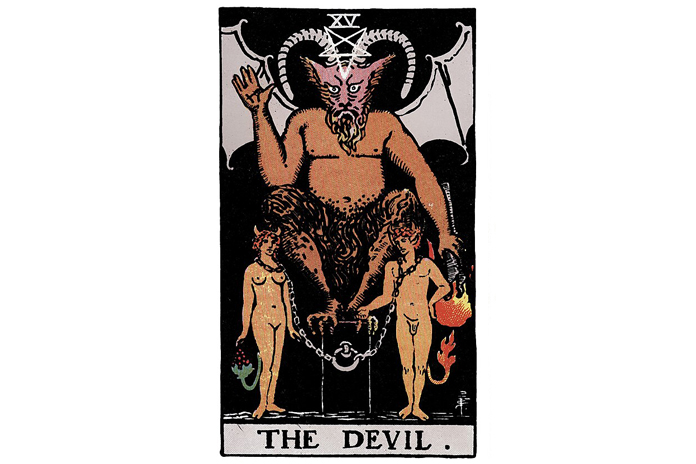
In the Rider–Waite image, The Devil sits enthroned above two figures who look trapped, yet their chains are loose enough to remove. That detail matters. The scene isn’t a prison with a locked door. It’s a room where people have forgotten they can stand up.
The horned figure is often read as “the monster”. I see it more as the part of us that insists on being fed, soothed, proven, satisfied, right now. The inverted torch hints at energy turned downward: instincts, sexuality, ambition, appetite, all becoming heavy when they aren’t handled with honesty.
The two figures mirror The Lovers, but with a different contract. This is connection without freedom, pleasure without presence, choice without awareness. When The Devil turns up, the symbols ask one direct question: What are you consenting to, without realising you consented?
Jungian Archetype of The Devil
Jung didn’t talk about “The Devil” as a tarot card, but he understood the force behind it: the Shadow. The Shadow is the part of the psyche we exile, then meet in disguised form. It becomes the craving, the compulsion, the secret life, the repeating relationship pattern, the private sabotage.
In real people, this archetype often shows up as the Addict (not always substance-related), the Controller, or the Pleaserwho calls resentment “loyalty”. The Devil can also represent the unowned self: anger you never expressed, desire you never admitted, grief you never finished.
Here’s the uncomfortable gift: the Shadow doesn’t go away because you lecture it. It softens when you face it without flinching. The Devil is that moment. Not a punishment. A confrontation that sets you back in your own hands.
Golden Dawn & Esoteric Correspondences
In the Golden Dawn tradition, The Devil is titled Lord of the Gates of Matter. That name gets misread. It doesn’t mean “matter is bad”. It means this card governs what happens when the material world (money, sex, status, pleasure, survival) becomes the only world.
The Hebrew letter linked to The Devil is Ayin (ע), often associated with the eye and perception. Psychologically, that’s perfect: The Devil changes the way you see. It exposes the blind spot, the rationalisation, the “it’s fine” that isn’t fine.
On the Tree of Life, The Devil is commonly placed on the path connecting Tiphareth (Self/Heart/Identity) to Hod (Mind/Stories/Patterns). In human terms, that’s the bridge between who you are and the story you keep telling yourself about what you deserve.
Astrologically, The Devil is tied to Capricorn: ambition, structure, responsibility, the long game. At its best, Capricorn builds a life with backbone. At its worst, it chains itself to fear, duty, image, or scarcity. These correspondences matter because they keep The Devil grounded in lived reality, not spooky theatre.
The Power of The Devil in Tarot Readings
The Devil often appears when someone is negotiating with a habit they’ve outgrown. It can signal a magnetic pull: you want something, you fear it, you resent it, you can’t stop thinking about it. It might show up around secret dynamics, manipulation, unhealthy bargains, or the need to “win” at love.
Emotionally, The Devil can feel like:
- restlessness that won’t settle,
- shame you can’t name,
- pleasure followed by regret,
- loyalty that drains you,
- the sense that you’re being “pulled” rather than choosing.
Timing-wise, this card tends to land when the pattern is ripe for exposure. Not because the universe is judging you, but because you’re ready to stop pretending the chain isn’t there.
The Devil Tarot Card Meaning in Love
In love, The Devil can describe intense chemistry, obsession, attachment, or a relationship shaped by power rather than tenderness. Sometimes it points to triangles, secrecy, jealousy, or emotional bargaining: “If I do this, you’ll finally give me that.”
It can also flag the quieter version: staying with someone because you’re afraid of being alone, or calling longing “love” when it’s really anxiety.
At its healthiest, The Devil invites brutal honesty. What do you want? Are you afraid to lose? What are you willing to tolerate just to keep the story going?
The Devil Tarot Card Meaning in Career
In career readings, The Devil often highlights being tied to a role, a status, or a paycheck in a way that erodes self-respect. It can point to overwork, burnout, and the kind of ambition that looks impressive but feels hollow on the inside.
It may also show up around office politics, manipulation, or working under someone who uses fear as motivation. If you’re self-employed, The Devil can reflect a business model that’s keeping you trapped: undercharging, overdelivering, or chasing approval instead of building something sustainable.
Values-led interpretation: this card asks where you’ve made a bargain that costs too much.
The Devil as Advice, Outcome & Spiritual Message
As advice, The Devil says: name the attachment. Don’t moralise it. Don’t dress it up. Just tell the truth about what’s happening and what you’re getting from it.
As an outcome, it suggests a moment of reckoning: a temptation, a power struggle, or a chance to break a pattern by choosing differently.
Spiritually, The Devil reminds you that freedom isn’t a vibe. It’s a practice. It’s the daily decision to stop handing your life to whatever shouts the loudest inside you.
When The Devil Appears During a Turning Point
The turning point with The Devil rarely arrives with fireworks. It’s usually smaller, sharper, more personal: you feel disgusted with your own excuses. You spot the pattern mid-sentence. You realise you’re trying to control someone because you don’t trust yourself to survive disappointment.
This card can mark the moment you stop romanticising the struggle. You don’t need a dramatic exit. You need one clean, honest choice, repeated until it becomes your new normal.
And yes, it can also signal a test: the old pleasure returns, the old person texts, the old craving rises. The Devil asks whether you’ll confuse intensity with destiny, again.
Walking the Journey with Experienced Psychics
If The Devil has appeared for you, you don’t need judgement. You need insight and a way through. In a personalised psychic reading, an experienced reader can help you identify what you’re truly attached to, and what it will take to step back into your own power.
For those seeking London psychic readings, our team approaches Tarot as a lived language, not a gimmick. Sometimes one grounded conversation is enough to loosen the chain and change what happens next.
Final Reflection
The Devil is the card of “be honest with yourself”. Not as a slogan, but as a survival skill. It doesn’t demand perfection. It demands ownership. Because the moment you stop pretending the chain is permanent, you remember you have hands. And hands can undo knots.